
Build a Website Without WordPress: Best Alternatives
If you've been searching for how to build a website without WordPress, you're probably not just curious, you're frustrated. Maybe WordPress broke something again. Maybe you spent a weekend chasing a plugin conflict instead of serving customers. Whatever brought you here, this much is true: you wanted a website, not a part-time IT job.
The good news is that there are real alternatives. One of them is far better than most people realize, and it has nothing to do with dragging boxes around a screen at midnight.

Why So Many Small Business Owners Want Out of WordPress
WordPress powers a substantial share of the internet, and its reputation as a flexible, powerful platform is well-earned. But there's a version of WordPress, the self-hosted kind, that small business owners often regret choosing.
The Hidden Costs and Headaches of Self-Hosted WordPress
Here's what nobody tells you upfront. Self-hosted WordPress installations require ongoing plugin management, core updates, and security patching. Those tasks can easily eat several hours a month, even for someone reasonably comfortable with technology.
And the problems tend to stack:
- A plugin update breaks your contact form.
- A theme conflict wipes your layout.
- A security vulnerability leaves your site exposed.
- You spend Saturday troubleshooting instead of running your business.
The emotional weight of that is real. You invested in a website to grow your business, not to become a part-time site administrator. If that resonates, you're not alone, and you're not wrong to look for something better.
Your Real Options: Website Builder
Without WordPress
When small business owners start exploring a website builder without WordPress, they typically land in one of two camps.
DIY Platforms
Drag-and-drop builders like Wix, Squarespace, and Webflow have genuinely improved in recent years. You can launch a basic site without writing a single line of code. Pricing starts low, often under $25 per month, and the templates look polished right out of the box.
If your budget is tight and you have time to learn, these platforms are worth considering seriously.
Done-for-You Web Design
The other option is hiring a professional to build and manage your site for you. This costs more upfront than a DIY subscription, but it produces a different result: a site built around your business goals, your brand, and your customers, with a real human available when something goes wrong.
That's what a done-for-you website actually means. Not just a site that exists, but one that works.
DIY Platforms: What You're Actually Signing Up For
Let's be fair. Wix, Squarespace, and Webflow have all made genuine progress. Website design without coding is more achievable in 2026 than it was a few years ago, and for a basic brochure site, these tools can do the job.
But here's the part most reviews gloss over: the platform is only the beginning.
After you choose a platform, you still need to:
- Write all your own copy
- Organize your pages for both users and search engines
- Choose fonts, colors, and layouts that reflect your brand
- Handle basic SEO, page titles, meta descriptions, image alt text
- Troubleshoot when something doesn't display correctly
Web design professionals consistently note that the biggest mistake small business owners make isn't choosing the wrong platform, it's underestimating how much ongoing time a DIY site demands. Time you could spend actually running your business.
A DIY site also rarely comes with strategy. You get a blank canvas and a lot of YouTube tutorials. That's fine if you enjoy that process. But if your goal is a site that generates leads, builds trust, and reflects where your business is going, a blank canvas is a slow start.
Understanding what small businesses actually need from an SEO partner makes this gap even clearer. A platform doesn't give you that thinking, a partner does.
What a Hands-On Web Design Partner Actually Does Differently
This is where the comparison gets interesting.
Custom Website Design vs. Template-in-a-Box
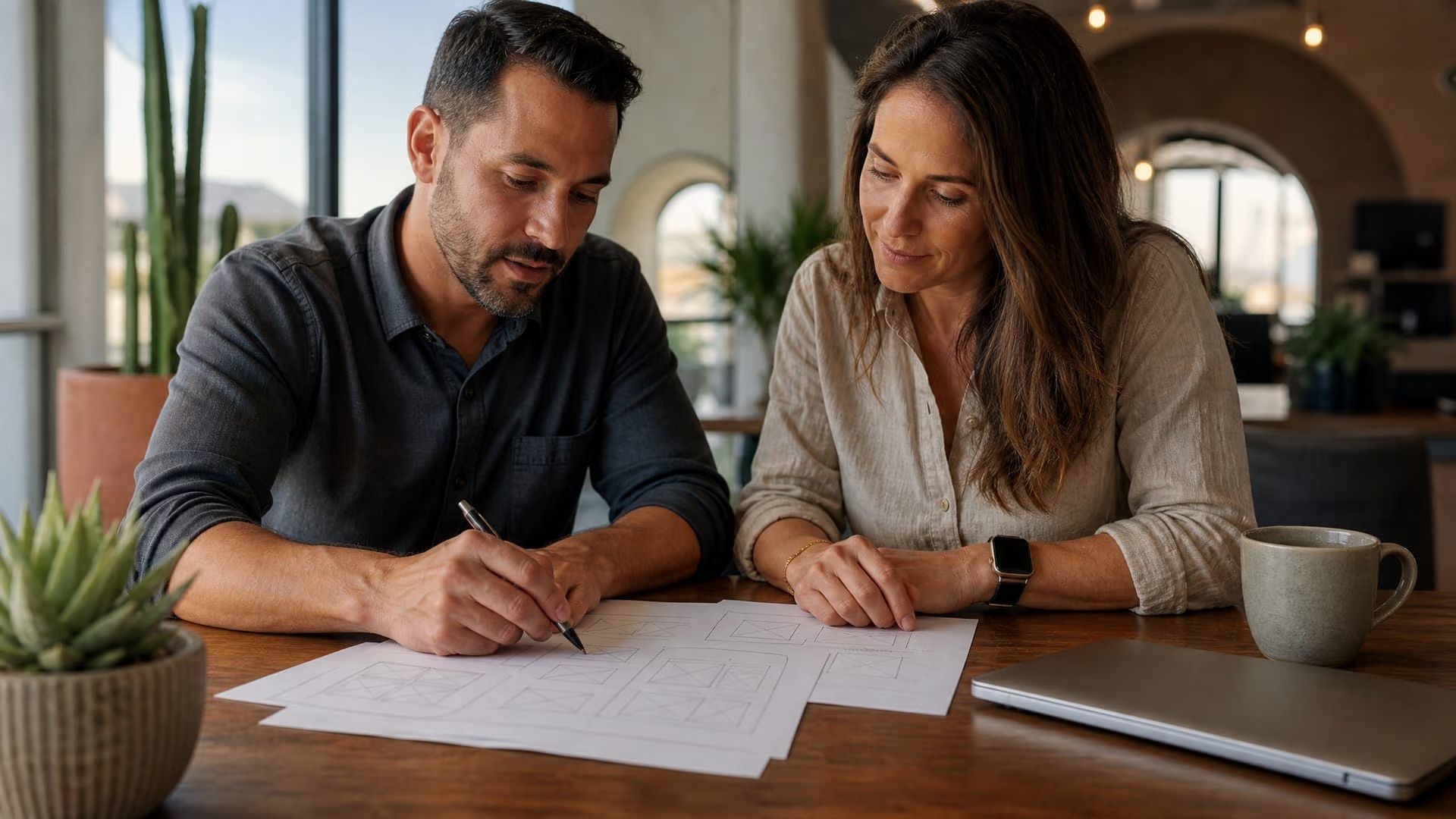
Custom website design for a small business doesn't mean building from a blank screen (though it can). It means the person building your site starts with a strategy conversation, not a template picker.
A good web design partner asks questions like:
- Who is your ideal customer, and what do they need to see before they trust you?
- What do you want visitors to do when they land on your homepage?
- What sets you apart from competitors in your market?
The answers shape everything, page structure, content priorities, calls to action, and the overall flow of the site. Template builders can't replicate that, because they don't know your business.
Built-in SEO foundations are part of this too. Heading hierarchy, page speed, mobile responsiveness, and structured content aren't afterthoughts in a custom build. They're designed in from the start.
And when something needs updating? You call a person. Not a chatbot. Not a support ticket queue.
Jesse Clark, founder of Easy-Click Web Design, spent over a decade as an educator and trainer before bringing that same step-by-step teaching approach to web design for small businesses. Clients consistently describe the experience as working with a knowledgeable friend, someone who explains what's happening and why, rather than just handing over a finished product and disappearing.
Getting a Big-Business Look on a Small Budget
A common fear is that custom web design is only for companies with big budgets. That used to be more true than it is today.
Modern design tools, streamlined workflows, and focused service packages have made it possible for small businesses to get a professional, credible web presence without enterprise-level spending. The key is finding a partner whose business model is built around small business, not one that treats you as a small fish while chasing larger clients.
What that looks like in practice:
- Straightforward, transparent pricing with no surprise invoices
- A site built for your goals, not repurposed from a previous project
- Ongoing support that doesn't require a retainer the size of a car payment
- A partner who understands that your marketing budget has limits and works within them
Once your site is live and generating traffic, the next natural step is content. A practical content marketing guide for small businesses can help you build on that foundation without starting from scratch.
How to Choose the Right Path for Your Business
Here's an honest decision framework, no sales pressure, just logic.
DIY might be right for you if:
- Your startup budget is very limited and you have time to invest in learning a platform
- You genuinely enjoy hands-on tech work and want creative control over every detail
- Your site is simple, a few pages, no complex functionality, no aggressive growth goals right now
A done-for-you website is likely the better move if:
- Your time is already stretched thin running your business day to day
- You want your site to actively generate leads, not just exist online
- Brand consistency and SEO structure matter to your growth plan
- You've already tried the DIY route and found it frustrating or ineffective
For most small business owners, time is the scarcest resource. Every hour spent wrestling with a website builder is an hour not spent on the work that actually pays you. A done-for-you solution costs more upfront, but it pays for itself faster than most people expect.
Getting Started: Your Next Honest Step
If you've read this far, you probably already know which direction makes sense for you. The question is just how to take the first step without it feeling like a big commitment.
Easy-Click Web Design keeps it simple. All services are delivered virtually, so it doesn't matter if you're in Phoenix, Peoria, or anywhere else in the country, you get the same hands-on, affordable experience. There's no corporate sales process, no jargon-heavy proposal you need a translator to read. Just a real conversation about what you need and whether we're the right fit to help.
Take a look at affordable plans built for small businesses to get a sense of what's possible. Or, if you'd rather just talk it through first, book a free conversation, no pitch, no pressure, just an honest look at your situation and your options.
The goal isn't to sell you something. It's to make this whole process feel less overwhelming, which, if you've been dealing with WordPress headaches, is probably exactly what you're looking for.
Share