
What Pages Should a Small Business Website Have?
If you've ever stared at a blank website builder wondering exactly which pages you need, you're not alone. Most small business owners assume more pages mean a more impressive site. In practice, the opposite is usually true. What matters isn't page count. It's whether each page does a job for your visitor and, ultimately, for your bottom line.
Easy-Click Web Design builds sites for small businesses and non-profits across the Phoenix metro area, including Peoria, Surprise, Glendale, and the West Valley. Across those projects, the same handful of pages keep showing up missing from DIY sites that struggle to turn visitors into leads. This guide walks through which pages a small business website should have, and why each one earns its place.

How Many Pages Does a Small Business Website Need?
Most well-performing small business websites settle into a lean structure of around five to eight core pages. That's it. Not twelve, not twenty. A sprawling menu often confuses visitors more than it impresses them.
The core set usually looks like this: a homepage, an About page, one or more Services pages, a Contact page, and often a Testimonials or FAQ page. Add a blog if you're ready to commit to it. That's the backbone of small business website structure for most local companies.
The Sweet Spot: Quality Over Quantity
A visitor who lands on your site typically decides within seconds whether to stay or leave. Every extra page you add without a clear purpose is one more chance to lose them in a maze of navigation.
Think of each page as answering one specific question a customer has. What do you do? Can I trust you? How do I reach you? Once you've answered those clearly, you don't need more pages. You need better ones.
Homepage vs About Page: What's the Real Difference?
This is one of the most common mix-ups on small business sites. Owners often try to cram their whole story onto the homepage, then leave the About page as an afterthought. Each page has a distinct job.
Homepage: Your 8-Second Pitch
Your homepage has seconds to tell a stranger three things: what you do, who you do it for, and what to do next. It's not the place for your full history or a long list of credentials.
Think of it as the elevator pitch version of your business. A clear headline, a short explanation of your service, and a visible next step, call, book, or request a quote, is enough. Everything else can live on other pages.
About Page: Why Small Businesses Skip This (and Shouldn't)
Many small business owners skip the About page entirely. They assume customers don't care about the backstory. That's a mistake. People hire people, especially for local services. The About page is where you build the trust a homepage doesn't have room for.
This is where you explain who's behind the business, why you started it, and what makes your approach different. A short story about why you got into landscaping, plumbing, or bookkeeping builds more trust than another paragraph of marketing copy.
Services Page Tips for Small Business Websites
If your website lists everything you do in one paragraph on the homepage, you're leaving both leads and search visibility on the table. A dedicated Services page, or better, individual pages for each core service, gives you room to explain what's included, who it's for, and why someone should choose you.
Why 'One Page for Everything' Hurts Local Search
Search engines match specific searches to specific pages. Someone searching "emergency plumber Glendale" is more likely to find a page built around plumbing repair than a homepage that mentions plumbing in passing.
When every service is crammed onto one page, you're competing with yourself for rankings instead of giving each service its own chance to be found. This matters especially for service businesses across Phoenix, Peoria, Surprise, and the West Valley, where local competition for the same searches is high. Building this out properly ties directly into SEO for small business websites, since separate service pages give search engines more specific content to match to local searches.
The Contact Page Isn't Optional, It's Where Money Walks in the Door
Take a plumber or a landscaper. If they bury their phone number in a footer or skip a dedicated Contact page, they routinely lose jobs to a competitor whose number is one click away. Your Contact page isn't a formality. It's the moment a curious visitor becomes a paying customer, or doesn't.
Jesse Clark, founder of Easy-Click Web Design and a former educator and trainer, likes to remind clients that a website isn't a brochure to admire. It's a tool that should do a job every single day. Nowhere is that truer than on the Contact page.
Contact Page Best Practices for Small Business
A strong Contact page includes more than a mailing address. At minimum, it should have a click-to-call phone number, a simple contact form, your service area, and business hours if they matter to your customers.
Skip the ten-field form that asks for details you don't actually need yet. Name, phone or email, and a short message field usually get you further than a long questionnaire. Make sure your phone number is clickable on mobile, too. A huge share of local searches happen on a phone, and a number someone has to copy and dial manually is a number they'll often just skip.
The Overlooked Pages That Generate Leads: Testimonials and FAQ
Some of the highest-impact pages on a small business site are also the ones owners skip first. Testimonials and FAQ pages don't feel urgent to build, but they quietly do a lot of the trust-building work that turns a hesitant visitor into an inquiry.
Testimonials Page for Small Business: Borrowed Trust
People trust other customers more than they trust a business talking about itself. A dedicated Testimonials page, separate from a scattering of quotes on the homepage, gives visitors a place to go looking for proof before they commit.
Even three or four solid reviews, with a first name and a specific detail about the job, do more than a generic five-star badge. If you serve the Phoenix area, pulling in reviews that mention specific neighborhoods or cities you've worked in reinforces both trust and local relevance.
An FAQ page works alongside testimonials by handling the objections that would otherwise stop someone from calling. Questions about pricing, timelines, service areas, or what to expect during a first visit belong here. Answering them upfront removes friction that would otherwise cost you a lead. Together, these pages are some of the most effective website pages for generating leads for a service business. If you want to go deeper on turning visits into inquiries, there are some proven strategies to improve your website's conversion rate worth reviewing.
Do I Need a Blog on My Website? And What Non-Profits Need Differently
A blog isn't a required page in the way a Contact page is. But it earns its place over time. Each post is another chance to show up in local search results, answer a customer's real question, and show that you know your field.
The honest answer to "do I need a blog on my website" is: not on day one, but plan for it. A blog built with consistency, even one post a month, builds authority that a static site can't match. For a deeper look at how to approach this without it becoming a chore, a practical guide to content marketing for small business lays out a realistic starting cadence.
Non-Profit Website Pages: Donate, Volunteer, Impact
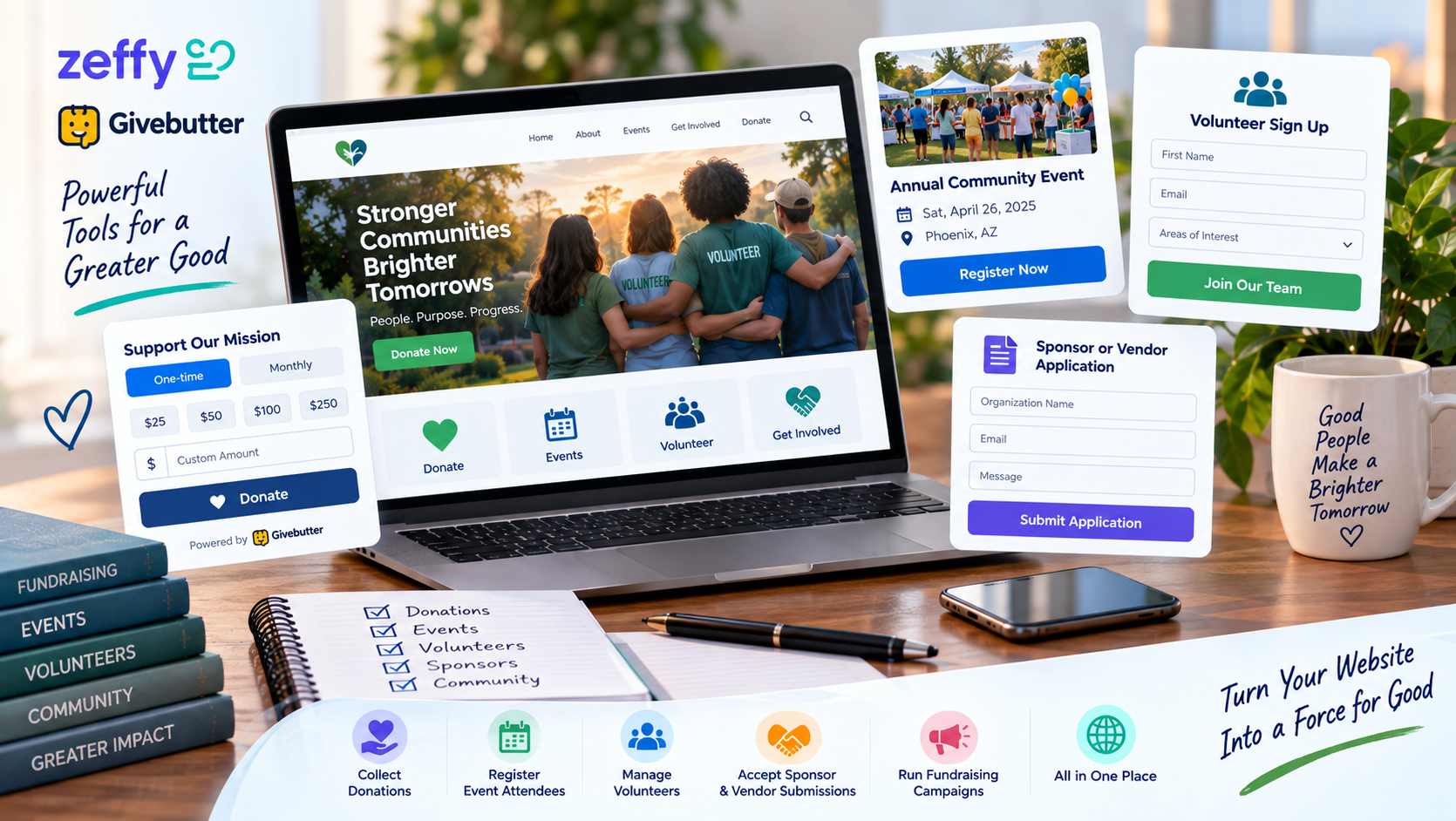
Non-profits need a slightly different page structure than a typical small business. The goal isn't a sale. It's a donation, a volunteer signup, or ongoing community support.
Non-profits that add clear Donate, Volunteer, and Impact or Programs pages tend to see stronger engagement than those relying on a single generic "About Us" page to carry every message. A Donate page needs to make giving simple and immediate, with clear options and no confusing detours. A Volunteer page should spell out exactly what's involved and how to sign up. An Impact or Programs page shows donors and volunteers what their support actually accomplishes. That's often the deciding factor in whether someone gives again.
If you're leading a non-profit and working with a limited budget, website design for nonprofits on a budget covers how to prioritize these pages without overspending. And if you want ideas for making the Donate and Volunteer pages themselves more compelling, non-profit website design ideas that drive donations is a good next stop.
Whether you're running a service business in Phoenix or leading a local non-profit, the pattern is the same: every page should have a job, and that job should connect back to a real outcome, a call, a form submission, a donation, a volunteer signup. If you're not sure which pages your current site is missing, a full small business website checklist is a good place to check your work against.
If you'd rather have a second set of eyes on it, Easy-Click Web Design works with small businesses and non-profits throughout Phoenix, Peoria, Surprise, Glendale, and the West Valley to build sites where every page pulls its weight. You can book a free consultation to walk through what your site has, what it's missing, and what to fix first.
Share