
Web Design for Nonprofits in Peoria AZ: Boost Donations
Your mission drives everything you do, but your website determines whether the community can actually find and support that mission. For nonprofits in Peoria and the broader West Valley, a digital presence needs to do more than sit online like a brochure. It has to work as a reliable engine for fundraising, volunteer recruitment, and community connection. Many organizations struggle because their current site feels disconnected from the local supporters they serve, or because donating takes more steps than it should. Effective web design for nonprofits in Peoria AZ closes that gap between what your organization needs and what the people who want to help you are actually willing to click through to do.
This guide goes past generic advice to address the specific realities of running a nonprofit in this region: building trust with local donors, adding technical features that secure funding, and choosing partners who understand your constraints instead of just selling you technology.
Key Takeaways and Next Steps for Your Organization
Effective web design for nonprofits in Peoria AZ combines local relevance, functional excellence, and inclusive accessibility to grow support sustainably. Review this checklist to assess where you stand:
- Visual content reflects recognizable Peoria and West Valley locations, not generic stock imagery.
- Donation forms work flawlessly on mobile devices with minimal required fields.
- Calls-to-action use specific language and appear prominently above the fold.
- Accessibility basics like alt text and keyboard navigation function correctly.
- Google Business Profile is claimed, verified, and updated regularly.
- Content addresses local search intent with genuine utility for residents.
- Your technology platform matches your internal capacity for ongoing maintenance.
Why Local Web Design Matters for Peoria Nonprofits
Digital strategy often ignores geography, yet your most dedicated supporters live within driving distance of your programs. When you invest in localized web design, you signal that your organization is part of the West Valley, not a distant national entity. That relevance matters most in the first few seconds, when a visitor is deciding whether your mission is real and active in their own neighborhood.
Connecting with West Valley Supporters
Peoria-based organizations often see higher engagement when they feature recognizable local landmarks or West Valley-specific program imagery in their hero sections. Stock photos of generic volunteers don't resonate, because they could belong to any charity anywhere. Images of Sunrise Park, the Peoria Center for the Performing Arts, or the local desert landscape ground your work in a place people recognize. Audit your current visual assets and ask whether they actually reflect where your staff and volunteers work every day.
Local relevance goes beyond photography. It shows up in language that names specific community needs and partnerships. Mention collaborations with other Peoria groups, whether that's local schools, city departments, or nearby faith communities, and you reinforce your active role in the ecosystem. Supporters want to fund solutions to problems they see in their own backyards, not abstract concepts.
Building Trust Through Community Presence
Trust is the currency of nonprofit fundraising, and familiarity breeds confidence. A website that clearly displays a local physical address, a phone number with an area code, and references to regional events shows visitors you're transparent and accountable. Visitors who can't verify your local footprint within seconds often leave to find an organization that feels easier to check.
That same community presence shapes how search engines categorize and rank your content for nearby queries. When your site consistently reflects local context through metadata, content, and structured data, algorithms treat you as a relevant result for residents searching for ways to give back. Credibility and discoverability reinforce each other here.
Essential Website Features for Nonprofit Fundraising
A beautiful site that fails to convert visitors into donors has failed its primary purpose. Your platform needs specific functional elements that remove the barrier between a supporter's intention to give and the completed transaction. These aren't optional extras; they directly influence conversion rates and donor retention over time.
Secure and Simple Donation Forms
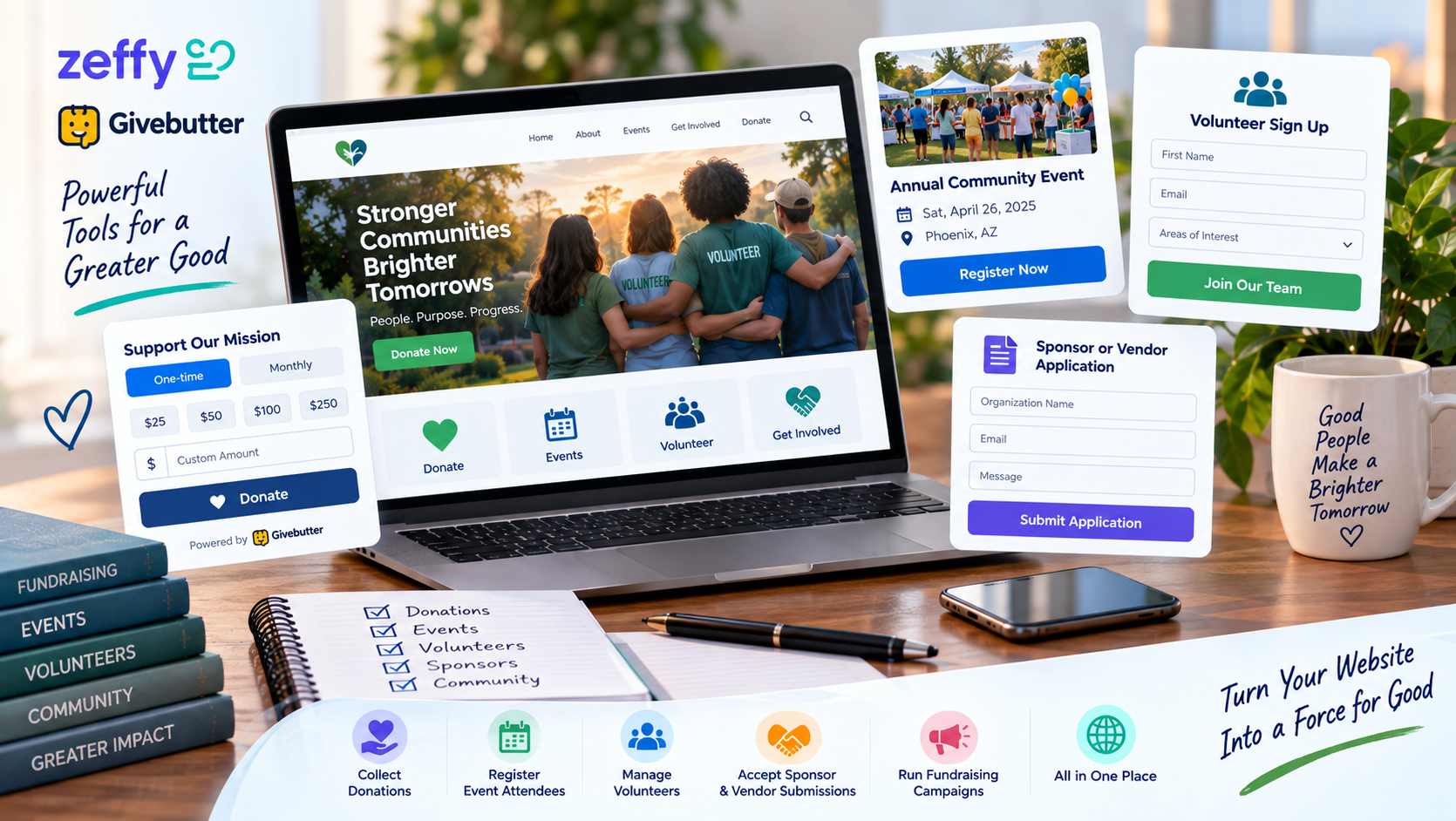
Your donation form should never require more steps than absolutely necessary to process a secure payment. Complicated multi-page forms cause abandonment, so prioritize single-page layouts that let guests give without creating an account first. Offer multiple payment options, including credit cards, PayPal, and increasingly popular methods like Apple Pay or Venmo, so different donors can use whatever they already trust.
Recurring gift options should sit prominently in the flow, but not push too hard during checkout. A simple checkbox letting donors make their contribution monthly can raise lifetime value without adding friction to the first transaction. Trust badges from payment processors and SSL certificates should be visible near the submit button, so users can see their financial data stays protected.
Mobile-First Design for On-the-Go Giving
More than half of all nonprofit website traffic now comes from mobile devices, which makes responsive design a primary factor in donation conversion. If your donation form requires pinching, zooming, or scrolling sideways on a phone, you're losing revenue from supporters trying to give in the moment they feel inspired. The importance of mobile responsive design goes beyond looks. It covers touch-target sizes, load speed, and how easily someone can fill out a form on a small screen.
Test your entire donation pathway on actual phones instead of relying only on desktop browser resizing tools. Buttons need enough spacing to prevent mis-taps, text needs to stay legible without magnification, and pop-ups should be avoided entirely, since they frustrate mobile users and hurt search rankings. Your site has to perform well on the device your donors are actually holding at events or while reading email.
Clear Calls-to-Action That Convert Visitors
Vague navigation labels like "Get Involved" or "Support Us" force visitors to guess where to click next. Specific, action-oriented language such as "Donate Now," "Register for Gala," or "Volunteer This Weekend" tells users exactly what to do and what happens next. Place your primary call-to-action above the fold on every key page, so visitors never have to scroll to find how to engage.
Color contrast and whitespace do a lot of the work in directing attention toward these conversion points without creating clutter. Explore design ideas that drive donations by studying peer organizations that balance emotional storytelling with clear functional pathways so visitors can move from learning about a cause straight to supporting it. Every page should have one primary goal and one dominant button that moves the visitor toward it.
Designing for Donor Engagement and Retention
Acquiring a new donor costs significantly more than retaining an existing one, which is why engagement features matter for long-term sustainability. Your website should nurture relationships by showing impact and offering ongoing ways to stay connected beyond the initial gift.
Showcasing Impact Stories Effectively
Donors give because they believe their contribution creates change, so your site has to prove that belief right with concrete evidence. Pair quantitative metrics, like meals served or families housed, with narratives that put a human face on those numbers. Guide visitors from awareness to action by placing testimonials and impact statistics strategically alongside giving opportunities.
Avoid burying your achievements in dense paragraphs. Pull quotes, infographics, and short video clips make impact easy to scan. Each story should connect directly to a way the reader can help continue that outcome.
Integrating Email and Event Promotion
Engagement features work best integrated, not siloed off from each other. Your event calendar should link directly to registration pages and include social sharing buttons that let attendees invite their networks. Put email signup forms on high-traffic pages like blog posts and impact stories, not just hidden in the footer where few visitors notice them.
Segment your email capture forms so subscribers can self-select their interests, whether that's volunteering, advocacy, or major gifts. That data lets you send communications that respect what supporters actually want and reduce unsubscribe rates. Integrating your website with your customer relationship management system means no lead falls through the cracks during a busy campaign.
Accessibility and User Experience Best Practices
Inclusive design fits nonprofit values while also improving technical performance and legal compliance. Excluding users with disabilities runs against the service ethos most charitable organizations stand for, and it shrinks your potential supporter base for no good reason.
Meeting WCAG Standards Without Complexity
You don't need a massive budget to make meaningful accessibility improvements. Start with alt text on all informative images, sufficient color contrast for body text, and a heading hierarchy that lets screen readers navigate logically. Keyboard navigation should work completely without a mouse, so users with motor impairments can reach every feature, including donation forms.
These foundational steps open your site to millions of Americans with disabilities who are otherwise locked out of inaccessible sites. Accessibility overlays and automated widgets often create false confidence without fixing the underlying structure, so focus on semantic HTML and thoughtful content instead. Compliance is a journey of continuous improvement, not a one-time certification.
Navigation That Serves All Audiences
Your information architecture should reflect how visitors think about your mission, not how your org chart is structured. Group content by what visitors want to do, like "Ways to Give," "Programs We Run," and "About Our Team," instead of by internal department. Search should return relevant results even when users misspell terms or use everyday synonyms.
Consistent navigation across all pages reduces the mental load for elderly supporters and those with cognitive disabilities. Breadcrumbs help users understand where they are in the site and give them an easy way back from deep content pages. User testing with real community members turns up friction points that analytics alone can't show you.
Local SEO Strategies for Peoria-Area Visibility
High-intent searches from nearby residents are your most valuable organic traffic source. Local SEO tactics built for charitable organizations help you capture that demand without competing for advertising budget against commercial businesses.
Optimizing Google Business Profile for Nonprofits
Your Google Business Profile works like a second homepage for many local searches, and it deserves regular upkeep. Make sure your category selection reflects your nonprofit status and specific mission area, not a generic label. Follow Google Business Profile tips for local visibility by posting weekly updates about upcoming events, volunteer needs, or success stories that keep your listing fresh.
Reviews from genuine supporters carry real weight in local ranking algorithms and in donor decision-making. Respond professionally to every review, positive or negative, to show active stewardship. Accurate hours, contact information, and service area details keep frustrated visitors from showing up when you're closed or calling the wrong number.
Content That Targets West Valley Searches
Create content that answers questions Peoria residents actually ask when they're looking for ways to get involved locally. Blog posts on topics like "volunteer opportunities in Peoria" or "how to help families in the West Valley" capture search intent that national content misses entirely. Location-aware landing pages for specific programs or events signal geographic relevance to both users and search engines.
Internal linking between local content pieces builds topical authority that strengthens your whole domain. Skip the keyword stuffing; write helpful resources that genuinely serve the community while working in location terms naturally. Publish local content consistently and, over months and years, your organization becomes the go-to resource for charitable engagement in the region.
Choosing the Right Platform and Partner
Technology decisions made today shape your operations for years to come. Choosing wisely means understanding trade-offs that generic web agencies often overlook when they pitch mission-driven clients.
Evaluating WordPress Alternatives for Limited Budgets
WordPress powers much of the nonprofit web because of its flexibility and plugin ecosystem, but it demands ongoing maintenance that strains small teams. Managed platforms like Squarespace or Wix cut the technical burden at the cost of customization and long-term scalability. Look honestly at your internal capacity before committing to a solution that needs skills your staff doesn't have or time they can't spare.
Website design for nonprofits on a budget means weighing upfront costs against total cost of ownership, including hosting, security updates, and plugin renewals. Open-source software can look free at first but racks up hidden costs in developer hours and emergency fixes. Document your functional requirements before you evaluate platforms, so you don't pay for capabilities you'll never use or miss features that turn out essential later.
What to Look for in a Nonprofit-Focused Designer
Technical skill matters less than understanding the specific constraints and opportunities nonprofits face. Easy-Click Web Design specializes in building sites that simplify technology for mission-driven teams, so staff can focus on programs instead of platform maintenance. Ask prospective partners about their experience with donation integrations, accessibility standards, and nonprofit-specific compliance before you sign anything.
References from similar organizations tell you whether a designer delivers a solution that lasts or just a good-looking mockup. Post-launch support matters enormously when bugs surface during peak fundraising season or staff turnover leaves a knowledge gap. Choose a partner who acts like an extension of your team, not a vendor who finishes a project and disappears.
If your organization lacks clarity on any of these points, an expert assessment can identify priorities without obligation. Schedule a free demo to discuss your specific web design needs and fundraising goals with someone who understands the Peoria nonprofit landscape.
Share